For individuals facing mobility challenges, the simple act of standing up becomes a calculated risk. The transition from sitting to standing is not just a physical movement; it is a fundamental step toward maintaining dignity, circulation, and functional independence. Traditional manual lifts often require significant effort from caregivers, while basic standing aids offer insufficient support for those with partial weight-bearing capacity. Enter the electric sit to stand lift, a sophisticated device designed to bridge the gap between complete dependency and autonomous mobility. These powered systems deliver a seamless, controlled rise that respects the patient's natural biomechanics while significantly reducing the physical toll on healthcare providers. Unlike older hydraulic models, an electric sit to stand lift uses a battery-powered actuator to provide a smooth, steady lift, eliminating the jerky motions that can cause discomfort or anxiety. This technology empowers users who retain some leg strength to actively participate in the transfer, promoting circulation, muscle engagement, and psychological well-being. The result is a safer, more dignified experience that transforms the care environment from a place of fear to one of possibility.
The Mechanics of Safe Mobility: How Electric Sit to Stand Lifts Work
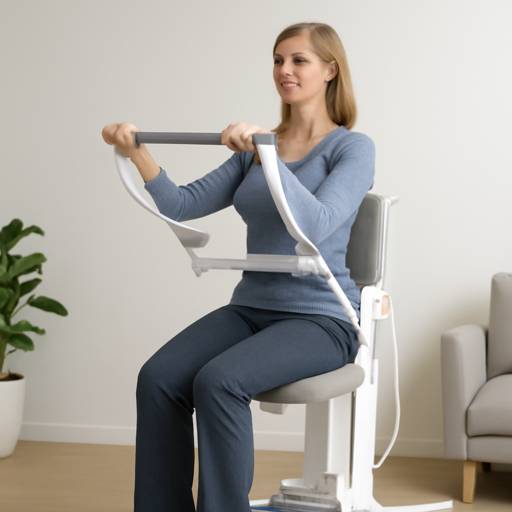
Understanding the engineering behind an electric sit to stand lift is crucial for appreciating its value in clinical and home settings. The core mechanism consists of a powered linear actuator that drives the lift arm upward and forward in a motion that mimics the natural sit-to-stand trajectory. This is fundamentally different from a ceiling lift or full-body sling lift, which hoists the patient vertically. The electric sit to stand lift operates on a principle of assisted weight bearing. The patient places their feet on a stable, non-slip footplate, and the lift uses a strategically positioned sling or padded support that wraps behind the back and under the arms. As the motor engages, the lift arm rises, gently pulling the patient forward and upward into a standing position. The patient can then bear a portion of their weight through their legs, with the lift providing the remaining support to ensure stability. This partial weight-bearing aspect is critical for maintaining bone density, joint health, and muscle tone. Modern units feature programmable controls that allow caregivers to set slow, gentle start speeds to prevent startling the user, followed by a consistent lift pace. The battery systems are designed for high-cycle usage, often providing 30 to 40 full lifts on a single charge, ensuring reliability throughout the day. Furthermore, the chassis design incorporates wide-leg bases that slide easily under most standard beds, chairs, and wheelchairs, while the castors lock securely to prevent any lateral movement during the transfer. These engineering choices prioritize both the safety of the patient and the mechanical longevity of the device.
Clinical and Caregiver Benefits: Reducing Strain and Building Confidence
The adoption of an electric sit to stand lift produces measurable improvements in both patient outcomes and workplace safety. From a clinical perspective, this equipment facilitates early mobilization protocols. After surgery or a prolonged illness, getting a patient upright as soon as possible reduces the risk of pneumonia, deep vein thrombosis, and pressure ulcers. The electric sit to stand lift makes this possible without subjecting the patient to the trauma of being lifted by multiple caregivers. The controlled, predictable motion reduces anxiety, which often causes patients to stiffen up, paradoxically making the transfer harder. When a patient feels secure, they are more likely to relax and use their own strength, accelerating the rehabilitation process. For the caregiver, the benefits are equally profound. According to occupational health studies, manual patient handling is a leading cause of debilitating back injuries among nurses and home health aides. An electric sit to stand lift eliminates the need for awkward bending, twisting, and heavy lifting. The caregiver simply positions the lift, secures the sling, and presses a button. This not only protects the caregiver's body but also frees up their hands to guide the patient and ensure proper alignment. The efficiency gain is substantial: a two-person manual transfer can take significant time and coordination, while a single caregiver using an electric lift can complete the task safely and swiftly. This reduces the number of staff needed for routine transfers, allowing facilities to allocate human resources more effectively. In home care settings, the lift enables a single family member to manage transfers that would otherwise require professional assistance, allowing the patient to remain at home longer. The psychological impact of this empowerment cannot be overstated, as it transforms the caregiver role from a source of physical strain to one of supportive guidance.
Real-World Applications: Case Studies in Rehabilitation and Long-Term Care
The practical utility of an electric sit to stand lift is best illustrated through real-world scenarios. Consider a 150-bed skilled nursing facility that implemented a unit-wide protocol using this specific equipment. Before adoption, staff reported an average of 3.2 worker compensation claims per year related to back injuries from manual transfers. After a 12-month period of using electric sit to stand lifts for all partial-weight-bearing patients, that number dropped to zero claims. Furthermore, patient fall incidents during transfers decreased by 40%, as the lift provided a stable, controlled pivot point that manual assistance could not match. A separate case study from an outpatient rehabilitation clinic for knee replacement patients demonstrated the device's role in functional recovery. Patients who utilized the electric lift as part of their early therapy showed a 25% faster improvement in sit-to-stand test scores compared to those who performed the exercise manually with therapist assistance. The reason was simple: the lift allowed patients to practice the correct movement pattern without fear of falling, reinforcing proper muscle memory from day one. The lift also proved invaluable for patients with progressive conditions like Parkinson's disease, where freezing of gait and postural instability make unassisted standing dangerous. Using the lift, these patients could overcome the initial freezing episode and engage in standing balance exercises. In home care, a case involving a 65-year-old stroke survivor highlights the emotional impact. The patient had significant hemiparesis on his left side but retained leg strength on his right. His wife could not physically lift him from a chair, forcing him to remain seated for hours. An electric sit to stand lift changed their daily reality, enabling him to stand, pivot to a commode, or take a few steps with a walker. This restored his ability to participate in family meals and use the bathroom independently, dramatically improving his quality of life and reducing his wife's caregiver burden. These examples show that the device is not just a mechanical tool but a catalyst for independence. When evaluating options for a loved one or a facility, researching a proven electric sit to stand lift is a critical first step toward implementing a solution that prioritizes safety and dignity. The data supports a clear conclusion: this technology reduces injury, speeds recovery, and restores a fundamental human function that many take for granted.