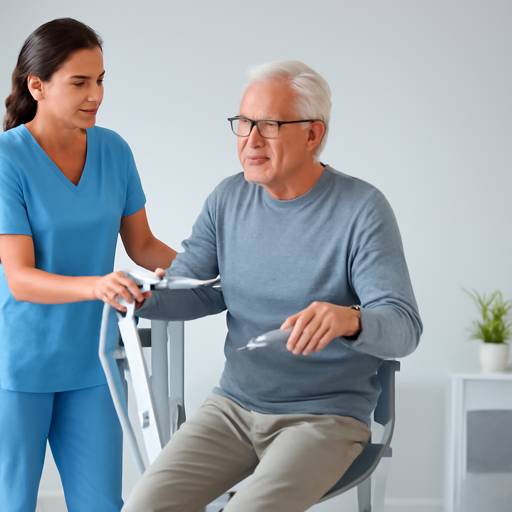
For patients with limited lower body strength yet the ability to bear weight, the gap between sitting and standing can feel like an insurmountable challenge. Traditional manual transfers often put both the caregiver and the patient at risk of injury, while standard lifting devices may not offer the active engagement required for rehabilitation. Enter the power sit to stand lift—a dynamic solution that combines motorized assistance with patient participation. Unlike passive lifts that hoist a person off the bed, these devices gently guide the user from a seated to a standing position, allowing them to shift weight onto their own feet. This approach preserves dignity, builds muscle strength, and dramatically reduces the physical strain on healthcare professionals and family caregivers alike. Whether in a hospital, long-term care facility, or private home, the rise of powered sit-to-stand technology marks a crucial evolution in mobility care.
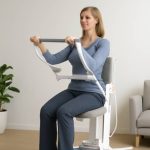
The core distinction of a power sit to stand lift lies in its electric actuator system. A hand control or foot pedal activates a smooth, steady lifting motion that tilts the patient forward while raising the body. The patient holds onto ergonomic handles or a padded contoured frame, and a knee pad stabilizes the lower legs. Because the patient actively participates by bearing weight and pushing up with their legs, the lift supports natural movement patterns rather than overriding them. This active transfer method is clinically recommended for individuals recovering from hip or knee surgery, stroke, or general deconditioning. It also reintroduces the proprioceptive feedback necessary for retraining balance and coordination. The result is a transfer that feels less like being "lifted" and more like being supported through a natural motion—a psychological and physiological advantage that speeds recovery and boosts confidence.
Modern power sit-to-stand lifts also incorporate safety features that manual models cannot match. Emergency stop mechanisms, descending speed governors, and non-slip base pads are standard. Many units include built-in weight scales and digital readouts that help clinicians track a patient's progressive weight-bearing capacity. The electric drive eliminates the need for manual pumping or cranking, which means caregivers of any size can perform transfers with consistent, controlled force. This technology aligns with the broader trend toward safe patient handling protocols designed to reduce work-related musculoskeletal disorders among nursing staff. By investing in a power sit to stand lift, facilities not only protect their patients but also extend the careers of their most valuable asset—their caregivers.
How a Power Sit to Stand Lift Works: Mechanics, Control, and Clinical Impact
Understanding the mechanics behind a power sit to stand lift reveals why it outperforms both manual sit-to-stand devices and full-body sling lifts in specific scenarios. The lift consists of a wheeled base frame, a vertical mast housing the electric actuator, a padded knee support, bilateral armrests or handles, and a seat sling or saddle. The patient begins seated on the edge of the bed or chair, feet flat on the floor. The caregiver positions the lift so that the knee pad rests against the patient's shins and the footplate is securely beneath the patient's feet. Once the patient grasps the handles, the caregiver activates the lift via a pendant control or remote. The electric motor drives the mast upward and forward simultaneously, creating a rotational movement that brings the patient to a stable standing position. The transition is slow and deliberate, typically taking 8 to 15 seconds, allowing the patient to feel fully in control.
From a biomechanical standpoint, the power lift replicates the natural sit-to-stand sequence. Research shows that during unaided standing, the center of mass moves forward over the feet before the body rises. A power sit-to-stand lift mirrors this by tilting the trunk forward approximately 10 to 20 degrees before lifting, reducing the hip and knee torque required. This alignment is critical for patients with joint replacements or arthritic conditions, as it prevents painful shearing forces. Additionally, the electric actuator provides consistent resistance and can be stopped or reversed at any point. If a patient feels dizzy or uncomfortable, the caregiver can lower them back to a seated position instantly—something impossible with a manual stand-pivot transfer where both hands are occupied. The fine motor control afforded by the powered mechanism also lets clinicians adjust the lifting speed to match the patient's comfort level, from a gentle gradual rise to a faster transfer for those with good stamina.
The clinical impact extends beyond the transfer itself. Studies on safe patient handling have demonstrated that implementing power sit-to-stand lifts reduces caregiver injury rates by up to 60% compared to manual methods. For patients, repeated use of these lifts can improve standing tolerance and leg strength, accelerating discharge from rehabilitation facilities. Occupational therapists often prescribe home-use powered lifts for patients transitioning from hospital to home, as they require less upper body strength than manual versions while still promoting weight-bearing. The power sit to stand lift thus functions as both a transfer aid and a therapeutic tool. By integrating it into daily care routines—such as for toileting, chair transfers, or standing for dressing—caregivers can maintain patient independence while protecting their own health. The device's ability to handle patients up to 400–600 pounds, depending on the model, makes it versatile across diverse body types and care settings.
Key Features to Consider When Selecting a Power Sit to Stand Lift
Not all power sit-to-stand lifts are created equal, and choosing the right model requires careful evaluation of several critical features. First and foremost is lifting capacity. While many devices support up to 400 pounds, bariatric models can accommodate 600 pounds or more. It is essential to verify not just the maximum weight, but the safe working load for the specific patient population you serve. The width of the base also matters—a wider base offers greater stability but may not fit through standard doorways. Look for lifts with adjustable base legs that spread open during lifting and contract for maneuvering. The knee pad design is another crucial element: contoured, foam-padded supports reduce pressure on the shins, while adjustable height and angle accommodate patients with leg length discrepancies or limited knee flexion. Some advanced models feature memory foam padding that conforms to the patient's anatomy over repeated use.
The control system can dramatically affect ease of use. Wired pendant controls are reliable and inexpensive, but they create cords that may interfere with movement or pose a tripping hazard. Wireless remote controls offer greater freedom, though they require battery management and signal reliability testing. Many newer lifts integrate digital displays that show battery level, weight reading, and number of lifts performed—valuable data for maintenance scheduling and patient progress tracking. The power source itself deserves attention: rechargeable batteries (typically 24V or 12V) should provide enough charge for a full shift of transfers, and quick-charge capabilities minimize downtime. For home use, units that operate on AC power with a battery backup ensure uninterrupted service during power outages. The mast height adjustment is also non-negotiable; a telescoping mast can accommodate patients of different statures and allows the lift to function with low chairs, high beds, and wheelchair seating alike.
Portability and storage often determine whether a lift is actually used consistently. Foldable or collapsible frames reduce the footprint for storage and transport. Lightweight aluminum construction helps caregivers move the lift between rooms without strain, but it must remain robust enough to handle daily wear. Casters are another detail that can make or break user experience: dual-wheel locking casters provide stability during transfers, while swivel front casters enhance maneuverability in tight spaces. Some models come with ergonomic push handles and foot-operated braking systems that keep hands free. Finally, ease of cleaning and infection control cannot be overlooked. Sealed seams, smooth surfaces, and removable padded components that can be wiped down with disinfectant are essential in healthcare environments. The power sit to stand lift you choose should align with your facility's cleaning protocols without damaging sensitive electronics. By thoroughly evaluating these features, you will select a device that maximizes safety, efficiency, and patient comfort for years to come.
Real-World Applications and Case Studies: From Rehab to Home Care
The versatility of the power sit-to-stand lift is best demonstrated through real-world scenarios across different care settings. Consider the case of a 72-year-old patient recovering from total hip arthroplasty in an acute rehabilitation unit. Two days post-surgery, the patient was able to stand with assistance but could not fully bear weight without support and was at high risk for falls during pivot transfers. The therapy team introduced a power sit to stand lift to facilitate bed-to-chair transfers. Using the lift, the patient could actively push through their legs while the device provided partial support, allowing them to stand safely for toileting and hygiene. Within five days, the patient's standing endurance improved from 30 seconds to over two minutes, and they transitioned to a walker with minimal assistance. The lift's ability to gradually reduce the level of support over successive sessions made it an effective stepping stone toward independent mobility.
In long-term care facilities, power sit-to-stand lifts have revolutionized the management of residents with progressive conditions such as Parkinson's disease or multiple sclerosis. One skilled nursing facility implemented a program where every resident capable of partial weight-bearing was evaluated for sit-to-stand lift use during morning care routines. Within three months, the facility reported a 45% reduction in staff injuries related to transfers. More importantly, residents experienced fewer episodes of orthostatic hypotension because the powered lift's slow, controlled ascent allowed their cardiovascular system to adapt. The lift also became a tool for dignified care: residents who previously needed two caregivers for a manual stand-pivot could now be transferred by a single staff member, reducing the feeling of being "handled" and preserving privacy. One resident with advanced multiple sclerosis noted that using the power lift helped her maintain the ability to stand for brief periods, something she had thought lost forever.
Home care presents unique challenges where space and caregiver training are limited. A case study from a home health agency followed a family caring for a 68-year-old man with post-stroke hemiparesis. The wife, who was 65 and had mild arthritis, struggled with manual transfers and had already sustained a back strain. After renting a power sit-to-stand lift with a narrow base and foldable frame, the agency trained the wife to use it independently. The lift's one-person operation allowed her to safely transfer her husband from his recliner to the commode and back, without needing to lift his full weight. The husband's confidence improved as he could actively contribute to the transfer by pushing through his stronger leg, and the couple regained a sense of normalcy in their daily routine. The agency's occupational therapist noted that the power lift was the single most impactful intervention in preventing institutionalization in that case. These examples underscore that the strategic deployment of a power sit-to-stand lift goes beyond equipment—it is a catalyst for better outcomes, reduced costs, and enhanced quality of life across the care continuum.